Composer · Score Work
Score, arrangement and recording work
Alongside the principal-tenor career on the world’s opera and concert stages, Russell has in recent years contributed compositional, arrangement, and tenor-line work to a small number of producers in the digital entertainment industry — slot-game studios and live casino game-show productions among them.
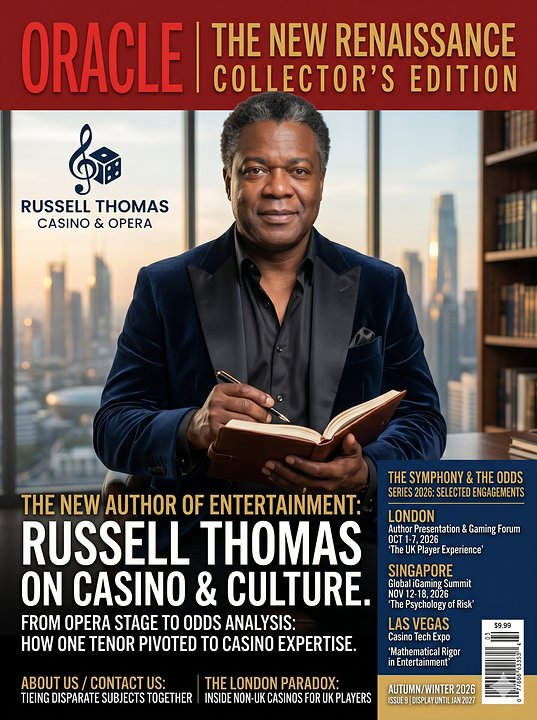
How the crossover happened
The work began the way most second careers do: a producer who had heard Russell live on a concert programme reached out about commissioning short orchestral cues for a slot-game studio that wanted a more cinematic feel to its title music. The brief turned out to be unexpectedly natural — the same instincts that govern a stage entrance (build, restraint, release) govern a thirty-second introductory cue. One commission led to a handful of others, and in time Russell was contributing recurring tenor-line work and short choral arrangements to several producers in the same sector.
The work has expanded to include live casino game-show productions — the broadcast-style live tables where presenters host roulette, blackjack, and game-show wheel formats from purpose-built studios. The score work is incidental rather than dramatic: short transitional cues, fanfares for round openings, and underscore for studio segments. The same disciplines apply — tempo holding under presenter dialogue, dynamic restraint so a cue never competes with the host, the strict timing of cue-points against an event clock.
Production credits
- Recording — Aceldama: Field of Blood, Thomas Sleeper (Albany Records). Principal tenor.
- Slot-game score work — original orchestral cues and tenor-line contributions to a small number of slot-game studios; titles withheld at producer request.
- Live casino game-show music — incidental score, transitional cues, and short arrangement work for several live-broadcast studio productions; titles withheld at producer request.
The connecting thread
The connecting thread between Russell’s operatic work and the score work is straightforward: in both, the music exists to serve an event that is partly mathematical and partly emotional. An opera score is built on numbered bars and metronome marks; a live broadcast is built on cue-points and event clocks. In both, the role of the music is to shape attention, hold tension, and release it at the moment the audience is ready. The compositional craft transfers cleanly.
For producers
For score and arrangement commissions, write to [email protected] with a brief, a target running time, and a delivery deadline. Russell is selective about projects but reads all enquiries personally.
Related
Editorial writing on the international online casino sector — an outgrowth of the same crossover — appears on the UK casino guide page.